

Quick answer: what mattered most in WooCommerce 10.3?
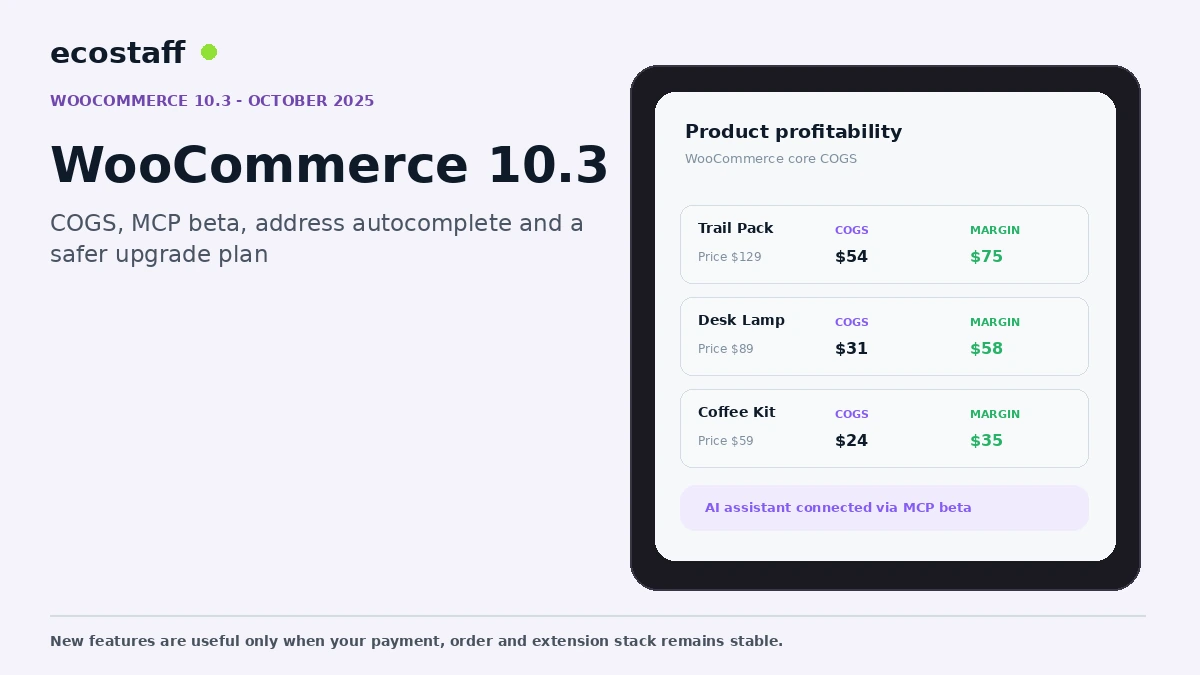
WooCommerce 10.3 shipped in October 2025 with Cost of Goods Sold (COGS) in core, address autocomplete for checkout, Product Collection Editor improvements and the WooCommerce MCP available for beta testing. The release also included a database update and arrived during an active patch cycle, so production stores still needed staging and payment QA.
For merchants, the most strategically interesting change was that WooCommerce was moving in two directions at once: better native commerce operations through COGS and checkout improvements, and a new AI integration layer through MCP. Neither removes the need for disciplined extension compatibility and security review.
WooCommerce has historically relied on extensions for many operational features. Bringing COGS into core matters because product cost is a foundational profitability field, while the MCP beta signaled that AI assistants could begin interacting with store capabilities through a standardized protocol.
The release also shows why WooCommerce updates should be evaluated as part of a live stack. Core features, WordPress compatibility, payment gateways, block themes and custom plugins can interact in ways a changelog alone cannot predict.
1. Cost of Goods Sold moved into WooCommerce core
WooCommerce 10.3 added a native COGS field and related functionality. For merchants, cost data can support a more realistic view of gross product margin than revenue alone.
COGS should still be governed carefully. The cost of a product can mean purchase cost, landed cost or another internal definition depending on the business. Freight, duties, packaging, marketplace fees and labor may or may not be included. Finance and merchandising should agree on the definition before using COGS for decisions.
| Metric | Simple formula | Operational use |
|---|---|---|
| Gross product margin | Revenue – COGS | Compare product profitability. |
| Gross margin % | (Revenue – COGS) / Revenue | Compare products with different prices. |
| Promotion floor | Price – required margin – other costs | Avoid discounts that destroy economics. |
| Inventory value | Units on hand x product cost | Support purchasing and finance analysis. |
2. Address autocomplete can reduce checkout friction
WooCommerce 10.3 added address autocomplete to Checkout blocks and shortcode-based checkout. This is a small feature with potentially meaningful UX value, especially on mobile, where typing full addresses is slower and error-prone.
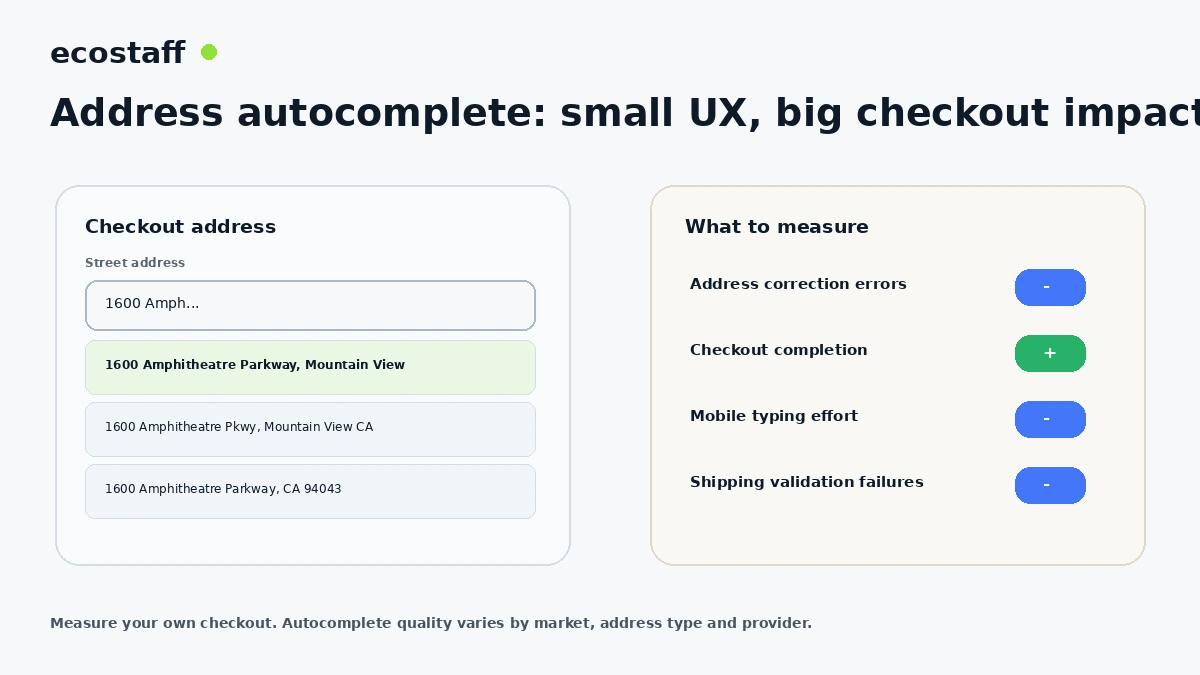
Test the feature in the countries that matter to the store. Address conventions vary, and B2B locations, apartment numbers, rural addresses or countries with non-standard formats may produce different results.
3. Product Collection Editor improvements reduce merchandising friction
WooCommerce continued improving block-based merchandising and Product Collection editing. For teams managing category and promotional experiences, this can reduce dependency on custom template work.
Before replacing an existing merchandising workflow, compare sorting, filters, visibility rules, performance, SEO output and how the editor behaves with large catalogs.
4. WooCommerce MCP entered beta
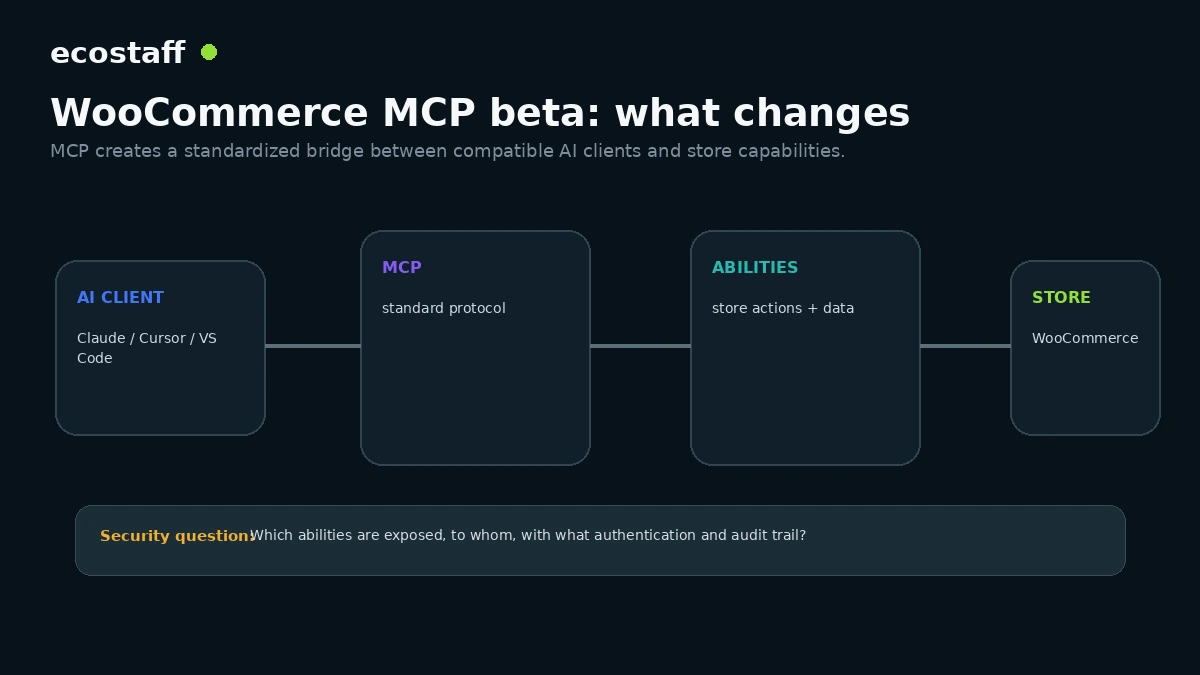
WooCommerce’s developer team described MCP as a standardized protocol that can let compatible AI clients such as Claude, Cursor or VS Code interact with store capabilities. The first release was explicitly positioned for testing.
The opportunity is significant: an AI tool could assist with store management or development workflows using structured abilities rather than scraping screens. The risk is equally important: any tool that can access store data or actions needs clear authentication, permissions, auditability and an understanding of what is safe to automate.
Good beta use cases
- Development and debugging in a non-production environment.
- Read-only catalog or configuration inspection.
- Generating reports from explicitly allowed store data.
- Testing narrow operational abilities with human approval.
High-risk use cases
- Autonomous production price changes.
- Bulk order or customer-data modifications without review.
- Giving a third-party AI client broad admin privileges.
- Using experimental abilities in live checkout or payment workflows.
5. Experimental empty-session clearing targets caching
WooCommerce 10.3 previewed an experimental feature for clearing empty customer sessions so unnecessary cookies do not prevent page caching for logged-out visitors. This is a technically interesting optimization because session cookies can interfere with full-page cache effectiveness.
Experimental performance features should be tested against carts, wishlists, personalization, geolocation, currency and other functionality that may rely on session behavior.
6. The release included a database update
Database updates change the rollback equation. A plugin rollback is not always enough if data migrations have already run. Before updating production, confirm the backup can restore both files and database to the same point in time.
7. Patch releases deserve attention
WooCommerce 10.3.1 through 10.3.3 followed quickly and addressed issues including order-data integrity, PayPal processing and third-party extension compatibility. This reinforces a simple release-management principle: use the current stable patch version and review the patch notes, not only the major-version announcement.
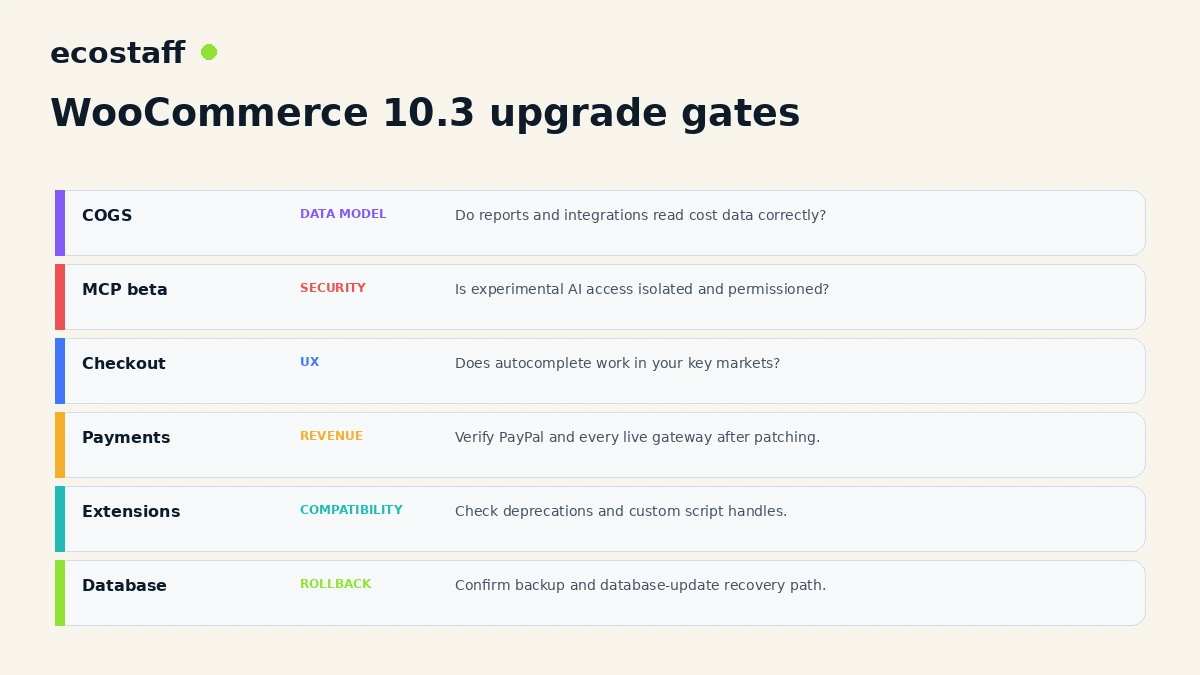
A practical WooCommerce 10.3 upgrade plan
- Create a current database and file backup.
- Clone the store to production-like staging.
- Update WordPress and critical extensions to supported versions.
- Review WooCommerce 10.3 and dot-release notes.
- Run the WooCommerce database update in staging.
- Test COGS data and any profit reports or exports.
- Test checkout address autocomplete in key markets.
- Test every live payment gateway.
- Review custom scripts and extension deprecation warnings.
- Keep MCP disabled in production unless there is a specific reviewed use case.
- Compare cart, checkout, order and analytics behavior with baseline.
- Deploy in a monitored window with a rollback path.
How to use native COGS without creating false precision
COGS can become valuable for pricing and purchasing decisions, but only if it is maintained. Define when costs are updated, who owns the field and how historical changes are handled. If purchasing costs change monthly but the catalog keeps an old value for a year, margin reports can become misleading.
For complex businesses, native WooCommerce COGS may be one input among several. ERP or accounting systems may remain the authoritative source for landed cost, inventory valuation or financial reporting.
MCP changes the security conversation
AI integration is not only a productivity topic. Treat MCP access like an API integration. Document the client, authentication method, available abilities, data exposed, action permissions and logging. A useful rule is to begin with the minimum scope and increase capability only after the workflow proves value.
When should a store use an agency or specialist?
External help is more valuable when the store has custom checkout code, complex COGS/accounting integration, many payment extensions, bespoke plugins, ERP synchronization or plans to experiment with MCP in production-adjacent workflows.
Ecostaff lists WooCommerce-focused companies. For the previous major release, see the WooCommerce 10.0 update guide.
A practical data-governance model for COGS
Native COGS becomes more valuable when the business treats it as governed product data rather than a one-time field import. Decide which system is authoritative, how costs are updated and whether the value represents purchase cost or fully landed cost. This is especially important when multiple suppliers, currencies or freight costs change during the year.
| Governance question | Example decision | Why it matters |
|---|---|---|
| Source of truth | ERP purchasing cost | Prevents WooCommerce and finance reports from drifting. |
| Update cadence | After every supplier price update | Keeps promotion and margin logic current. |
| Currency | Store accounting currency | Avoids false margin from exchange-rate mismatch. |
| Historical logic | Snapshot cost at order time | Allows past order margin to remain interpretable. |
| Ownership | Procurement + finance approval | Prevents unreviewed manual edits. |
MCP beta security checklist
- Use a non-production store for first tests.
- Create the minimum required user or application permissions.
- Prefer read-only abilities before enabling write actions.
- Document which customer, order and product data the client can access.
- Review authentication and token storage.
- Log every production-adjacent action where possible.
- Require human approval for price, order, customer or inventory changes.
- Remove unused credentials after experiments.
Frequently asked questions
Is WooCommerce MCP production-ready in 10.3?
WooCommerce described MCP as available for testing in beta. Treat it as experimental and review the current documentation before exposing production data or actions.
Does native COGS replace accounting software?
No. It provides a commerce-level product-cost capability. Formal accounting, landed-cost logic and inventory valuation may still belong in ERP or accounting systems.
Should every store enable address autocomplete?
It is worth testing, especially on mobile, but measure behavior in your key countries and customer segments. Address quality varies by market and use case.
Can I update directly from WooCommerce 10.0 to 10.3?
Follow WooCommerce’s current update guidance and validate extension compatibility. The exact safe path depends on the live stack, database state and plugin versions.
Sources and further reading
- WooCommerce Developer Blog – WooCommerce 10.3: COGS comes to core and MCP beta
- WooCommerce Developer Blog – WooCommerce 10.3 pre-release updates
- WooCommerce Developer Blog – WooCommerce 10.3.1 – 10.3.3 dot releases
- WooCommerce Developer Blog – AI and Agentic Commerce roadmap
Conclusion
WooCommerce 10.3 combined practical store operations with an early AI integration layer. Native COGS and address autocomplete can create immediate value, while MCP is more strategic and should be approached with security and experimentation discipline.
For production merchants, the best upgrade process remains familiar: stage the real stack, test payments and order data, understand the database change and adopt new features only when ownership and measurement are clear.